
What is the law relating to God’s temple? Ezekiel summarizes it in simple words. ‘This is the law of the temple: the whole territory on the top of the mountain all around shall be most holy. This is the law of the temple’ (Eze 43:12). Ezekiel wrote this in relation to the permanent temple built at Jerusalem to worship the Lord.
We know that before the construction of the temple the Israelites had their tabernacle erected from where the Lord blessed them with his mighty presence. Moses was given an elaborate instruction manual for the construction of the tabernacle and its framework, ark of the covenant, table for the bread of the presence, lampstands, altar of burnt offering and everything associated with it like the curtains, priestly vestments and anointing oil. Instructions were also given regarding the court of the tabernacle and its hangings (Ex. chapters 25 to 31).
‘Moses was faithful in all God’s house as a servant’ (Heb 3:5) and he executed each and every work as desired by his Master. While going through the narration of erecting the tabernacle, one thing that catches our eyes is that Moses was meticulous in adhering to the instructions given to him by the Lord. The Holy Bible took five full chapters to narrate the way Moses did his work as commanded by the Lord (Ex. chapters 35 to 39). This itself is proof of how much importance our Lord gives to matters connected to his temple. ‘Moses did everything just as the Lord had commanded him’ (Ex 40:16).
As we read further we see the consecration of the tabernacle. There we come across a phrase that appears no less than seven times. It is ‘as the Lord has commanded Moses’ (Ex 40: 19-32). Indeed Moses and his people conducted themselves in the presence of the Lord in tune with what the Lord commanded them.
This is precisely the law of the temple; To do those things in a way, at a time, and with the holiness that the Lord commanded us. The first and foremost thought that should rule our mind at the time of entering a church is this golden rule of the temple.
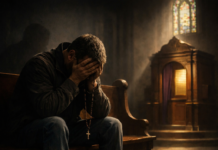
So let us re-examine the way we conduct ourselves in the church. Is it according to the Lord’s wish that we go to the church late or leave the church before the service is completed? Does the Lord like the ringtones of our cellphones inside the church? How offended will the lord feel when someone uses the cellphone totally ignoring the divine presence in which he is? Nuns walking through the altar with their hands and lips attached to their cellphones, altar boys who seldom think of the holiness of the altar and sacristy are painful sights.
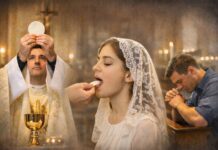
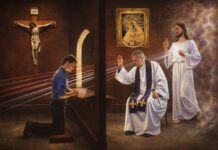
A trend of receiving Holy Communion without first having a good confession is a practice fast catching up in many churches. Holiness is a precondition to enter holy places and the punishment for breaking the rule is nothing but death, says the Holy Bible (Ex 30:20). But many of our brothers and sisters receive the Holy Communion in a state of sin disregarding the warning given by St Paul to those ‘who eat the bread or drink the cup of the Lord in an unworthy manner’ (1 Cor 11:27-30).
The tent of assembly erected by Moses, the temple constructed at Jerusalem and all the sacrifices and rituals associated with them were nothing but a shadow of the eternal sacrifice that would be performed by Jesus Christ at the appointed time in future. As for the new Israel, our church and the daily Holy Mass are types of the eternal glory that awaits us in heaven. Those who have this thought in mind will give the church its due reverence. They will never dare to approach the holy place in a state of sin. They know that the ‘new heaven and new earth that we wait in accordance with the Lord’s promise where righteousness is at home’ (2 Pet 3:13), as also the heavenly Jerusalem that the Lord is preparing for us are reserved exclusively for those who are found holy (Rev.21:8,21:27).
Our Lord calls us to holiness especially in holy places.‘For they will be made holy who observe holy things in holiness’ (Wis. 6:10). Let us respond to his call by taking a firm decision to conduct ourselves in a holy way while in the church.
(www.v-catholic.com)